

By: Mubarak Ahmad
The recent controversial statement attributed to National Conference MLA from Zadibal, Tanvir Sadiq, has generated a considerable amount of political debate in Jammu and Kashmir. Statements in support of and opposition to the legislator have followed in quick succession, with political actors, commentators and ordinary citizens attempting to establish whether his assertion has any basis in the historical and social realities of Kashmir. The controversy, however, has gradually assumed dimensions far beyond the original statement. What ought to have been a matter of historical verification and reasoned political discussion has increasingly descended into partisan rhetoric, personal attacks and competitive political point-scoring.
Coincidentally, while observing this debate, I happened to come across a copy of Sir Walter Lawrence’s The Valley of Kashmir in my home library. Lawrence’s work, based on his extensive observations of Kashmiri society during his tenure in Kashmir, remains an important historical and ethnographic source for understanding the social life, customs and material culture of the Valley. It therefore seemed appropriate to consult the book rather than rely merely on political assertions or social-media commentary.
A particularly relevant discussion appears in Chapter X, “Social Life,” where Lawrence describes, among other things, the clothing and social habits of ordinary Kashmiris. His account states that both men and women commonly wore a heavy, full-length gown or robe reaching down towards the feet. In the case of men, drawers, referred to as kaethi in Kashmiri usage, were worn underneath the gown. What is conspicuously absent from this description, however, is any suggestion that Kashmiri men were historically distinguished by an absence of pyjamas or trousers in the manner now being suggested in the political debate.
This distinction is important. Historical evidence has to be interpreted within its proper context. The fact that the pheran was traditionally a dominant item of Kashmiri clothing does not, by itself, establish that trousers or other forms of lower-body garments were unknown or not worn. Nor does the prevalence of a particular traditional dress justify sweeping claims about what Kashmiris did or did not wear throughout history. Clothing practices, like other aspects of social life, evolve over time and vary according to class, region, occupation, season and social circumstances.
One may therefore legitimately ask how MLA Tanvir Sadiq arrived at the categorical conclusion that appears to have triggered the present controversy. Political leaders occupy positions of public trust and consequently bear a greater responsibility for ensuring that historical assertions made in public are accurate, nuanced and capable of withstanding scrutiny. The electorate cannot reasonably be expected to accept every political claim merely because it is made by an elected representative.
Unfortunately, the subsequent political response has not helped matters. Instead of treating the controversy as an opportunity for clarification, historical verification and responsible public discourse, the issue has been amplified by political actors on both sides. The Chief Minister’s decision to defend the legislator, rather than insist upon greater precision in the original assertion, has further complicated the matter. Similarly, the intervention of Beerwah MLA Dr Shafi Ahmad Wani, who reportedly sought to defend his party colleague by invoking The Valley of Kashmir, demonstrates the importance of reading historical sources carefully rather than selectively.
The broader historical reality is, of course, more complex. Traditional Kashmir was characterised by a relatively modest and restrained way of life, and the pheran undoubtedly occupied a central place in Kashmiri dress culture. But an assertion about the predominance of traditional clothing should not be transformed into a sweeping claim that Kashmiris did not wear trousers or comparable garments. Historical societies are rarely as uniform as political rhetoric makes them appear.
There is another, more fundamental, issue at stake here. Kashmir’s political discourse has developed an unfortunate tendency to invoke the achievements of historical political leaders whenever the contemporary political establishment is confronted with criticism. The legacy of Sheikh Mohammad Abdullah is undoubtedly significant. He was a towering political figure whose influence extended well beyond Jammu and Kashmir, and whose political career was intertwined with many of the most consequential developments in the region’s modern history. Likewise, the contributions of figures such as Bakshi Ghulam Mohammad, G. M. Sadiq, Syed Mir Qasim, Mufti Mohammad Sayeed and Ghulam Nabi Azad occupy an important place in the political and developmental history of Jammu and Kashmir.
Yet historical achievement cannot become a perpetual political shield against contemporary accountability.
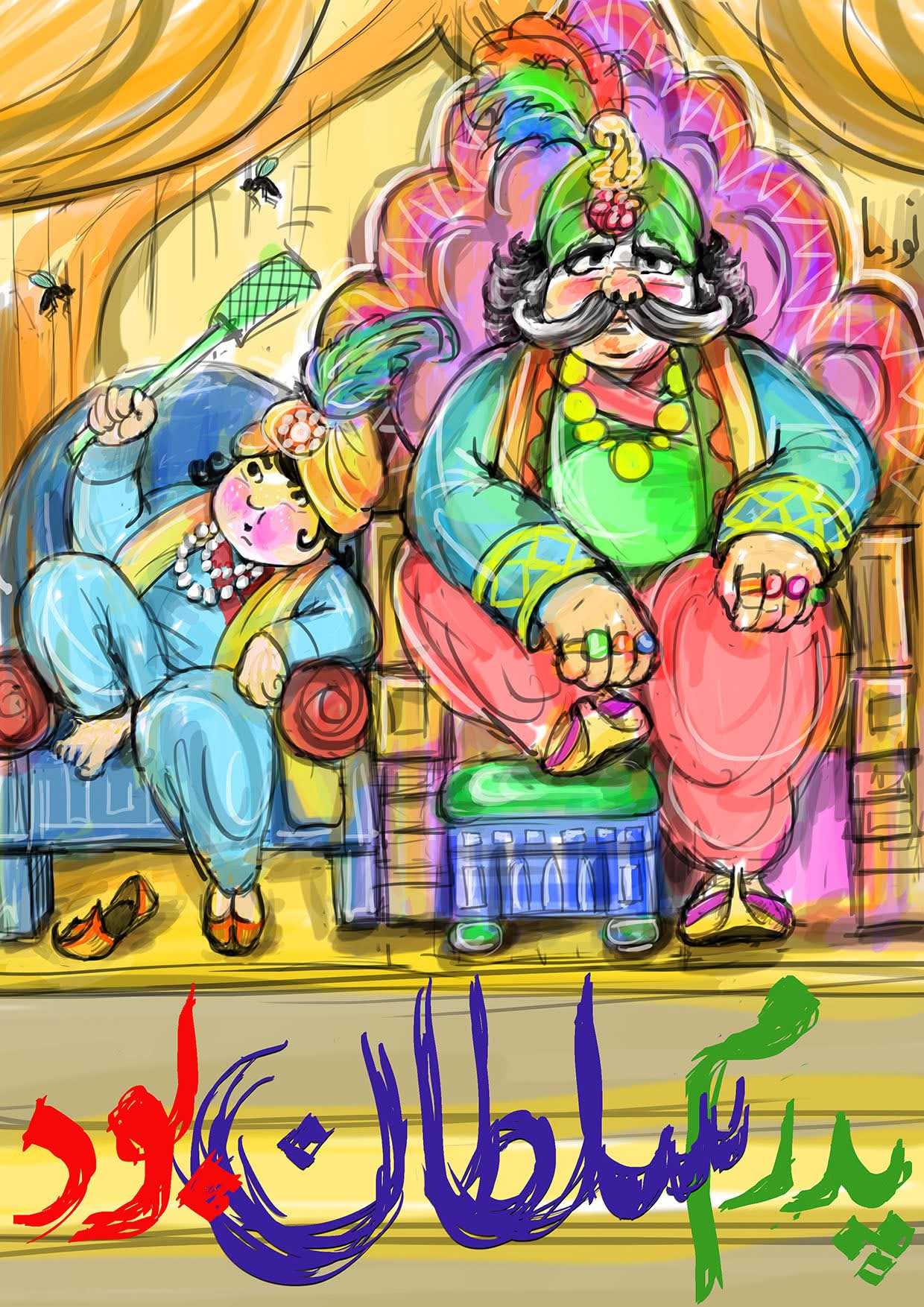
The achievements of one’s political predecessors—or even one’s own previous achievements—cannot automatically absolve a government or political party of responsibility for its present omissions and commissions. This is where the idea encapsulated in the Kashmiri expression “Pidram Sultan Bood” becomes particularly relevant. Literally invoking the authority or stature of one’s forefathers, ancestors or predecessors may have cultural resonance, but as a political argument it cannot substitute for present-day performance. A government must ultimately be judged by what it is doing now to address the problems confronting the people.
The electorate does not vote merely to commemorate political legacies. It elects governments to govern.
Consequently, instead of expending disproportionate political energy on questions of historical clothing, political personalities and rhetorical exchanges, the ruling dispensation would do better to concentrate on the substantive issues confronting ordinary people. The question before the government should be how to address the concerns surrounding reservation policies and their perceived fairness; how to create meaningful employment opportunities for the educated and unemployed youth; how to provide economic security to vulnerable sections of society; and how to control the increasing prices of essential commodities.
The political establishment’s primary concern should be the welfare of the citizen rather than the defence of political egos.
There is, however, another dimension to this controversy that deserves serious consideration: the manner in which the public itself has responded to it.
There was a time when political commentary was largely the domain of journalists, academics, writers, intellectuals and politically engaged citizens who were expected to possess at least a reasonable familiarity with the subject on which they were commenting. The emergence of social media has fundamentally altered that landscape. Today, anyone with access to Facebook, X, YouTube or other digital platforms can immediately enter a political debate, irrespective of whether they possess adequate knowledge of the subject under discussion.
Democratisation of public discourse is not inherently undesirable. On the contrary, social media has given ordinary citizens unprecedented opportunities to express themselves, question authority and hold public representatives accountable. The problem arises when participation is divorced from verification, context and intellectual responsibility.
In the present controversy, as in many others, there appears to be a tendency to judge an argument according to one’s personal feelings about the politician making it. If an individual dislikes a particular political leader, virtually anything said by that leader may be dismissed without examining its substance. Conversely, political supporters may defend an assertion simply because it has been made by someone belonging to their preferred party.
This represents a serious deterioration in the quality of democratic discourse.
A mature political culture requires citizens to evaluate an argument on its merits rather than merely according to the identity of the person making it. Political disagreement is legitimate; intellectual dishonesty is not. Criticism should be evidence-based, and defence should be equally grounded in evidence.
Unfortunately, our political class has not necessarily demonstrated a higher standard.
One of the more troubling features of contemporary political discourse in Jammu and Kashmir is the growing tendency of political leaders to engage in personal attacks and competitive humiliation. Instead of concentrating on policies, governance and public welfare, politicians increasingly appear preoccupied with what their opponents say about them, how they can respond, and how effectively they can embarrass one another.
They watch one another’s faces rather than performance. They listen carefully to what their opponents say, but pay considerably less attention to what their opponents—or they themselves—actually do.
The present controversy provides an almost perfect metaphor for this tendency. What began as a debate about traditional Kashmiri clothing has evolved into a spectacle in which political actors appear determined to “pull each other’s pyjamas.”
This is “Pyjama Politics” in its most literal political sense: a form of public discourse in which the objective is not to solve problems but to expose, embarrass or ridicule one’s political adversary.
There is, of course, nothing wrong with holding political leaders accountable. Indeed, exposing contradictions, challenging misinformation and scrutinising public statements are essential elements of democracy. But accountability should be directed towards substantive issues. Personal humiliation and rhetorical theatrics may generate social-media engagement, but they rarely improve the lives of ordinary citizens.
The deeper tragedy is that neither the ruling establishment nor the opposition appears to be making full use of the political space available to them to address the genuine concerns of the people.
The ruling dispensation has the responsibility of governing. It must therefore demonstrate seriousness in addressing unemployment, economic distress, rising prices, administrative inefficiencies and the concerns of different categories of workers. If its policies are successful, it should communicate those achievements through measurable outcomes rather than political rhetoric. If policies have failed, the government should acknowledge the shortcomings and correct them.
The opposition, meanwhile, has an equally important constitutional and democratic responsibility. Its task is not merely to criticise personalities or manufacture controversies. A credible opposition must identify failures of governance, demand answers, scrutinise government expenditure and policies, mobilise public opinion around genuine grievances and compel the government to fulfil its electoral commitments.
Unfortunately, much of the opposition’s political energy appears to be consumed by personal exchanges and social-media confrontations.
This is particularly disappointing because several opposition leaders are active and visible participants in contemporary political discourse, particularly on social-media platforms. Their visibility provides them with an opportunity to shape public debate around issues that genuinely matter to the people.
They could, for instance, devote sustained attention to the plight of unemployed youth, daily-wage workers, NYC workers, Anganwadi workers, NHM employees, medical interns and other categories of workers whose economic and professional concerns require serious political intervention. They could scrutinise recruitment policies, demand transparency in employment processes, question delays in appointments and press the government to provide concrete timelines for fulfilling its promises.
Instead, too much political capital is being spent on controversies that are unlikely to produce any tangible benefit for the ordinary citizen.
The people of Jammu and Kashmir do not need more political theatre. They need competent governance, responsible opposition and a political culture in which facts matter more than slogans.
They need employment rather than political speeches about employment.
They need affordable essential commodities rather than rhetorical concern about inflation.
They need transparent and equitable policies rather than political accusations and counter-accusations.
They need meaningful representation rather than social-media performances.
And, above all, they need political leaders who understand that electoral mandates are not permanent entitlements. Every government eventually has to return to the people and seek their judgment.
The present controversy should therefore serve as an opportunity for introspection on both sides of the political divide. The ruling establishment should recognise that defending every controversial statement made by a member of its political family may not always strengthen its credibility. At times, acknowledging an error, seeking clarification or correcting the record demonstrates greater political maturity than an instinctive defence.
Similarly, opposition parties should understand that every controversial statement made by the government or its representatives does not automatically constitute the most important political issue of the day. The opposition’s effectiveness should be measured by its ability to transform public grievances into political accountability—not by the number of controversies it manages to amplify.
Historical debates deserve historical evidence. Political disagreements deserve political arguments. And public grievances deserve serious political action.
There is nothing wrong with discussing Kashmir’s traditional dress, its cultural heritage or its social history. Indeed, such discussions can be intellectually enriching when conducted with reference to credible historical sources. What is objectionable is the use of history as a political weapon without adequate evidence, followed by equally unsubstantiated counterclaims in the name of partisan loyalty.
Nor is there anything inherently wrong with invoking the legacy of great political leaders. The problem begins when the accomplishments of predecessors are used to avoid accountability for the present.
Sheikh Mohammad Abdullah’s achievements cannot permanently answer questions about today’s unemployment. Bakshi Ghulam Mohammad’s developmental record cannot bring down today’s prices. The political legacy of G. M. Sadiq, Syed Mir Qasim, Mufti Mohammad Sayeed or Ghulam Nabi Azad cannot, by itself, resolve the contemporary problems of workers, students or job seekers.
History deserves respect—but history cannot govern the present.
It is time, therefore, to move beyond “Pyjama Politics” and “Pidram Sultan Bood.”
Author is a retired government teacher. He can be reached at [email protected]

