

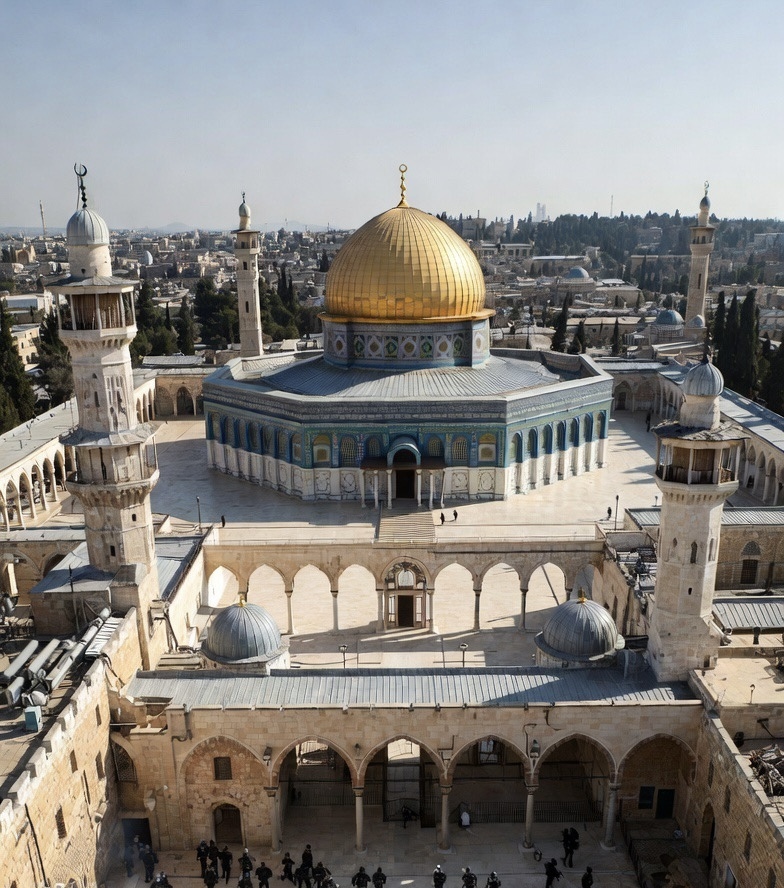
Jerusalem: The Al-Aqsa Mosque compound in occupied East Jerusalem was closed to Muslim worshippers during Eid al-Fitr prayers on March 20, 2026, marking a significant and unprecedented restriction amid the ongoing regional conflict.
Israeli authorities imposed a full closure of the site, preventing thousands from performing the traditional Eid prayers at Islam’s third-holiest site. This decision was cited by Israeli officials as a security measure linked to the escalating war involving Israel, the United States, and Iran, which began with joint strikes on Iran starting February 28, 2026. The closure has been in effect for approximately 20-22 days (reports vary slightly on the exact count), extending through the end of Ramadan—including key observances like Laylat al-Qadr and the last Friday of the month—and into Eid al-Fitr.
As a result, no Eid prayers were held inside the Al-Aqsa compound, with reports describing the courtyards as empty and silent for the first time in decades. Some sources, including Turkish outlet Yeni Şafak claimed this was the first time in 839 years that Eid prayers were not held at the site, emphasizing its historical status as Islam’s first qibla (direction of prayer). However, other reports more commonly reference it as the first such ban since Israel’s occupation of East Jerusalem in 1967 (nearly 59 years), or unprecedented in modern times under the current administration of the site.
Hundreds of Palestinians gathered outside the walls of Jerusalem’s Old City to perform Eid prayers in the streets, as access to the mosque was barred. In some instances, Israeli forces reportedly used tear gas to disperse crowds attempting to pray nearby. Palestinian leaders and religious figures, including Sheikh Ekrima Sabri (former Mufti of Jerusalem and preacher at Al-Aqsa), issued calls and fatwas urging worshippers to pray as close as possible to the compound.
The Islamic Waqf, the Jordanian-administered body responsible for the site, was informed of the extended closure, with access limited to a small number of Waqf staff (around 25 per shift in recent weeks). Palestinians and Muslim organizations condemned the move as a violation of religious freedom and worship rights, viewing it as part of broader efforts to restrict access and assert control over the sensitive holy site. Protests erupted in places like London, condemning the closure.
Israeli authorities have maintained that the restrictions on holy sites in Jerusalem, including Al-Aqsa, are temporary and tied to the “security situation” from the conflict with Iran, which has seen missile exchanges and heightened regional tensions. No specific reopening timeline has been provided beyond “beyond Eid.”
This event has drawn widespread attention and sorrow among Muslims globally, with the Old City of Jerusalem appearing largely deserted and shops shuttered during what is typically a festive period. The closure highlights the intersection of ongoing geopolitical conflicts and access to sacred religious spaces in Jerusalem.

